
Retail inflation dipped marginally to 6.44 per cent in February, mainly on account of a slight easing in prices of food and fuel items though it remained above the Reserve Bank's comfort level of 6 per cent for the second month in a row. As per the government data released on Monday, the Consumer Price Index (CPI)-based inflation was at 6.52 per cent in January and 6.07 per cent in February 2022. The retail inflation rate for the food basket worked out to be 5.95 per cent in February, marginally lower than 6 per cent in January.

While India won't be immune to global spillovers, we need to create the macro preconditions for sustained growth. Policy agility, prudence, and resilience will be key, suggests Sonal Varma.

Vegetable rates may ease from September, led by tomato prices, which have started showing signs of correction on the back of increased supply, Reserve Bank of India (RBI) Governor Shaktikanta Das said on Wednesday. "Looking ahead, the spike in vegetable prices in July is starting to see a correction, led by tomato prices. "New arrivals of tomatoes in mandis are already softening the prices, coupled with proactive supply management in the case of onions.

Petrol, diesel, LPG and kerosene prices are unlikely to be revised immediately as the Congress-led Government, which is yet to assume office

The Centre should provide a clear regulatory pathway that it will follow so that automobile companies can plan their investments and car launches accordingly, Venkatram Mamillapalle, managing director (MD) & chief executive officer (CEO), Renault India Operations, said on Tuesday. Renault is planning to launch five cars - including a B-plus segment sport utility vehicle (SUV), a C-segment SUV and an electric vehicle (EV) - in India in the next three years, he told reporters. In early 2022, the ministry of road transport and highways had announced that cars in India would be required to have six airbags from October 1, 2022.

The size of Reserve Bank's balance sheet increased by 11.08 per cent to Rs 70.47 lakh crore as on March 2024, leading to the highest-ever dividend payout to the government, according to the central bank's annual report. In actual terms, the increase was Rs 7,02,946.97 crore over Rs 63.45 lakh crore as on March 2023.

The wholesale price-based inflation declined to a 21-month low of 5.85 per cent in November on easing prices of food, fuel and manufactured items. After remaining in double digits for 19 months, the wholesale price index (WPI) based inflation declined to 8.39 per cent in October. The inflation was 14.87 per cent in November 2021. "Decline in the rate of inflation in November 2022, is primarily contributed by fall in prices of food articles, basic metals, textiles, chemicals & chemical products and paper & paper products as compared to the corresponding month of the previous year," the commerce and industry ministry said on Wednesday.

Although the credit for acquiring the technological skill must be given to India's outstanding nuclear scientists, the decision to go nuclear was a political one that entailed clarity of vision, courage and resolve, points out Rup Narayan Das.

It is in circumstances like this that the Constitution becomes extremely important. It reminds us that we have a commitment towards higher human values to fulfil, a path to get back to, suggests Shyam G Menon.Else, we risk being rudderless in an ocean of money and majoritarianism, suggests Shyam G Menon.

The wholesale price-based inflation declined to over two-year low of 3.85 per cent in January on easing prices of manufactured items, fuel and power, even though food articles remained expensive. This is the ninth straight month of decline in the rate of wholesale price-index (WPI) based inflation. The WPI inflation was 4.73 per cent in January and 13.43 per cent in February, last year.

'The prime minister took a meeting recently and he asked for suggestions and ideas for a plan till 2047.'
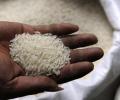
Increasing sugar production shall create problems for the industry, whereas boosting ethanol output can bring rich returns, Union Minister Nitin Gadkari told sugar mills on Wednesday. Speaking at a conference on sugar and ethanol, organised by the Indian Sugar Mills Association, Gadkari surprised the audience comprising senior executives of sugar mills by stating that the future will become bleak for the industry if it continues to churn out high quantities of sugar. "We need more ethanol than sugar. Also, bio-ethanol is the way to go as it can be stored for a longer duration as compared to conventional ethanol. "If you increase sugar production, it will create more problems for you.

Adani Total Gas Ltd, the joint venture of billionaire Gautam Adani's group and French energy giant TotalEnergies, will invest Rs 18,000 crore to Rs 20,000 crore in the next 8 to 10 years to expand infrastructure for retailing CNG to automobiles and piping gas to households and industries, its CFO said. The company retails CNG to automobiles and pipes gas to household kitchens for cooking purposes in 52 licences that cover 124 districts of the country. It has 460 CNG stations in the country and about 7 lakh consumers of its piped cooking gas.
While the government expects the new urea policy to bring more investment, the fertiliser industry is less than enthused. New capacities to make urea, industry representatives say, will come up only if adequate fuel and timely payment of subsidy dues is ensured.

The wholesale price-based inflation eased to a 29-month low of 1.34 per cent in March on easing prices of manufactured products and fuel items, even though food articles turned expensive.

'It is not simply demonetisation or GST, it is this government's failure to manage the financial sector crisis.'

Sugar sector has been buoyed up by high sugar prices and seeks policies to promote ethanol as green fuel in the ensuing Union Budget 2010-11.
The change in the Foreign Trade Policy means that jet fuel sold in India to international flights will be treated as physical exports and not attract most of the domestic tariffs.
The Reserve Bank on Friday retained the inflation forecast for 2023-24 at 5.4 per cent, and vowed to take timely measures to prevent any spillovers of global food and fuel price shocks. Stressing that the Reserve Bank has identified high inflation as a major risk to macroeconomic stability and sustainable growth, Governor Shaktikanta Das said the September retail inflation number may be lower than August and July prints. The headline inflation based on Consumer Price Index (CPI) moderated to 4.6 per cent in first quarter of 2023-24 as compared to 7.3 per cent in the same period a year ago.

Wholesale price-based inflation rose to an eight-month high of 0.26 per cent in November, driven by a sharp jump in food prices, especially onion and vegetables. The WPI inflation was in the negative or deflationary zone for the past seven months since April and was at (-)0.52 per cent in October. The last positive WPI inflation was recorded in March at 1.41 per cent.

Tata Steel was the biggest gainer in the Sensex chart, rising 2.39 per cent, followed by Tata Motors, Power Grid, Reliance Industries, UltraTech Cement, NTPC, Nestle, HUL, Mahindra & Mahindra, Wipro, Kotak Mahindra Bank and Asian Paints. In contrast, Bajaj Finance, IndusInd Bank, Axis Bank, Bharti Airtel, Bajaj Finserv, ICICI Bank, Infosys and Titan were among the laggards.
The finance ministry is believed to have objected to some provisions of the policy.
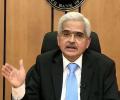
With inflation under control, the Monetary Policy Committee's (MPC's) job is to support growth because the economy had recovered well from the lows in the initial months of the pandemic, according to the panel's members, who met in the first week of this month. The minutes of the meeting show the Reserve Bank of India (RBI) governor in his statement said: "Given the sharp moderation in inflation along with a stable near-term outlook, monetary policy needs to continue with the accommodative stance to ensure that the recovery gains greater traction and becomes broad-based." Ashima Goyal, external member of the MPC, said: "The current macroeconomic configuration and its expected future evolution imply there is space for the MPC to continue to support the revival of the economy with inflation remaining in the target band."
Expressing concerns over rising prices of essential commodities globally, Finance Minister P Chidambaram on Friday favoured adjustments in domestic policies to contain inflation. Pointing to global oil prices touching new highs, the finance minister said: "It is important to factor in price increase and adjust our policies so that inflation doesn't get out of hand."

'There are occasions when the prices of individual items like food raise inflation; then supply-side measures must be taken.' 'But if there is continued inflation, it means liquidity is aggravating the situation.'

India's economic growth will be above 6 per cent in the current fiscal as the country has managed to strengthen its macroeconomic stability and performance even in a period of large global shocks, RBI Monetary Policy Committee (MPC) Member Ashima Goyal said on Monday. Goyal further said that a global slowdown reducing India's export growth, geopolitics fueling oil and food prices, and erratic weather are some of the continuing risks that the country faces. "India has managed to strengthen its macroeconomic stability and performance even in a period of large global shocks.
Firmly rejecting the contention that rising consumption in developing nations was responsible for the soaring food and fuel prices, India has blamed the policies of World Bank and IMF and 'excessive and unsustainable' demand in developed countries for the crisis.
Wholesale price inflation remained in the negative territory for the fourth month in a row in July at (-)1.36 per cent, even though prices of food items, especially vegetables, skyrocketed. The inflation, however, has inched up from (-)4.12 per cent recorded in June fuelled by 62.12 per cent rise in vegetable prices. In July last year, wholesale price index (WPI) was 14.07 per cent.

The stronger than expected monsoon has not yet softened food inflation as much as it should have and in particular, vegetable prices have been impacted by weather-driven supply disruptions, said RBI Governor D Subbarao while unveiling the first quarter monetary policy review.

Taxes on ATF in India are among world's highest, and are seen as key reason for mounting losses of airlines.

For protein rich items such as meat and fish, eggs as well as milk and products, the inflation in May slowed compared to last month

Tamil Nadu is leaving no stone unturned in marketing its upcoming global investors meeting on January 7 and 8. While business veterans are promoting the positives of the state's industrial climate through the 'Titans of Tamil Nadu" campaign, the state is narrating the human stories behind its robust industrial growth via the 'One Trillion Dreams' campaign. Among the industry bigwigs, who are showcasing Tamil Nadu to the world through this mega marketing initiative include Venu Srinivasan of TVS Motor Company, K M Mammen of MRF Ltd, Pratap Reddy of Apollo Hospitals, P R Venketrama Raja of Ramco Group, Mallika Srinivasan of TAFE; and Vellayan Subbiah of Murugappa Group.

Six decades and more later, we are now captives of our identities. Every poll is based on elaborate calculations of electability of candidates on the basis of their castes and other narrow definers. That, along with voter promiscuity, is what defines our political culture, which remains stubbornly resistant to any change, asserts Shreekant Sambrani.

Retail inflation crossed the RBI's comfort level and rose to 5.21 per cent in December on increase in prices of food items.

Bond markets, global as well as domestic, are likely headed towards hard times over the next three to six months, as higher vegetable prices, rising fuel costs, and improved wages may keep inflation hot, believe analysts, who expect the yields to hit 7.5 per cent in the near-term from the current 7.234 per cent. In this backdrop, they suggest investors can put in money in funds/instruments with residual maturity of 4 to 6 years, while longer-term investors can allocate cautiously to the longer end in the range beyond 7 years.
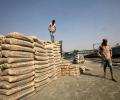
The sector may be overcrowded with a fair number of large players and the entry of the Adani Group through its two key acquisitions, followed by the takeover of majority stake in Sanghi Industries via Ambuja Cements. Since every major player is in expansion mode, there could be a capacity surplus and hence, price wars.

The action, announced by Union Home Minister Amit Shah, is a response to the group's involvement in fomenting terrorism and spreading anti-India sentiment within the Union territory of Jammu and Kashmir.

The 6-member Monetary Policy Committee, headed by Reserve Bank of India Governor Urjit Patel, in its fifth bi-monthly review, kept the repo rate unchanged at 6 per cent and reverse repo at 5.75 per cent.
India Inc on Friday said major announcements made by government, including operationalisation of 51 per cent FDI in multi-brand retail, are huge "mood lifters", besides dispelling the impression of any policy paralysis in the government.
